4.4b AI training
← 4.4a AI inference / ↑ 3c Enterprise / → 4.5 Governance/security
AI training: fit and evaluate a model using example data.
TOC
| Example | # | Specific problem for a ZAI_example | Potential inspiration |
| E17 | 2 | (TRAIN) Detect unusual readings in timestamped measurements | Time-series anomaly detection |
| #619 | 15 | Predict a numeric result and compare predictions with actual outcomes | Supervised model training |
- D8 train model #619_pal_D8_model_integration_
- #619_pal_D8_model_integration_.
D8 demo model trained in Foundry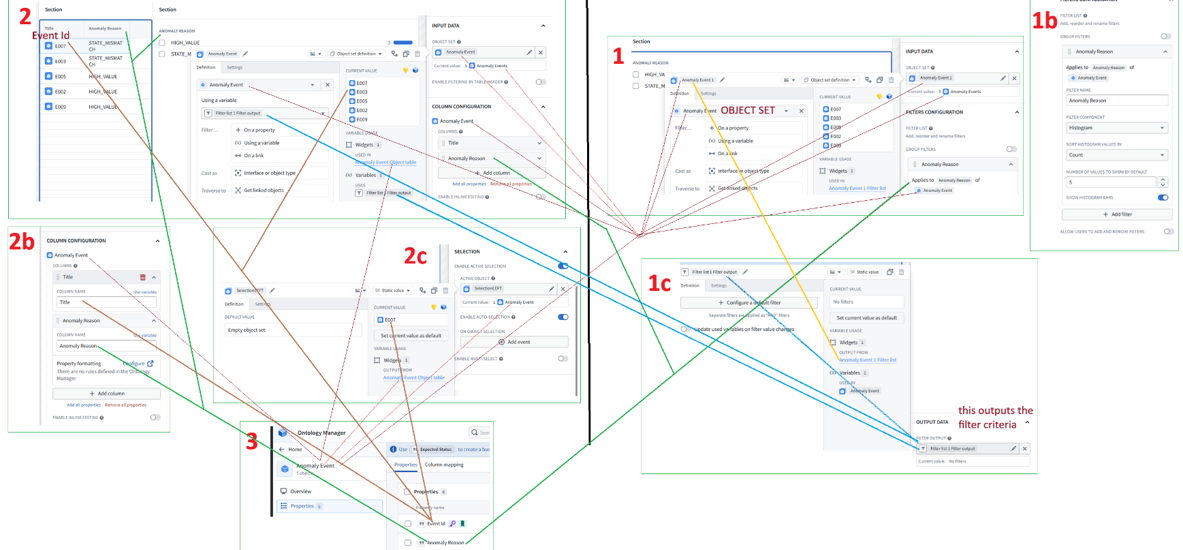
D8 (WIP) — Deep Dive: Model integration (26.0905)
Demo D8 explores how a traditional machine-learning model can be trained, deployed, and used for inference inside Palantir Foundry. The demo first examines Foundry’s Model Studio and model-management workflow, then creates a project and trains models using two approaches: Model Studio and a Jupyter notebook. Finally, the trained model is deployed and connected to an interactive application for inference. The demo therefore follows much of the model lifecycle: data → training → model → deployment → inference → application.
Training of the internal model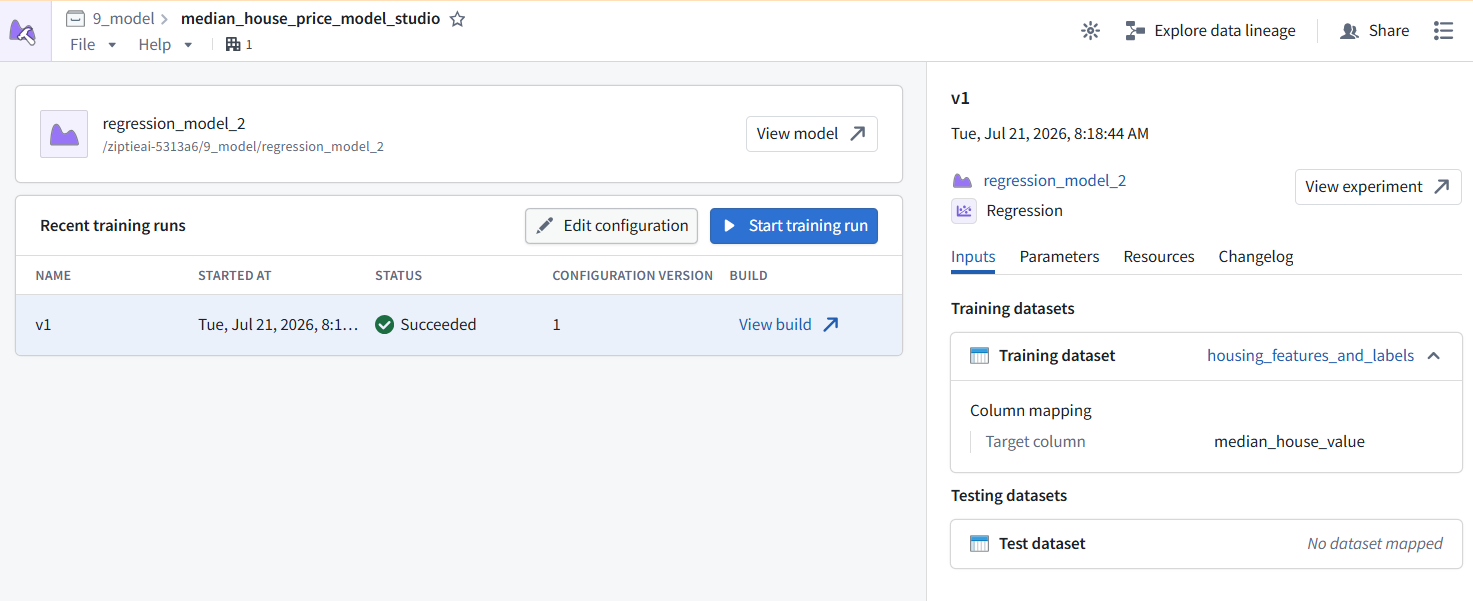
DD-3 D8 Train model (#619)
pal_3.6_15_model_train (#619)
Understood. T1–T6 are Palantir’s role-based classifications, preserved in your inventory—not the organizing principle for ZAI_examples. Your examples should be organized by the problem being solved.
You want 10–20 working, well-documented examples, not exhaustive coverage or another course catalog. Here is a candidate set drawn from your inventory:
D8a (TODO) (FDE VERSION) Understanding models in Foundry (26.1122)
Identify the model resources, deployment options, input/output contracts, and differences among external APIs, imported models, internally hosted models, and custom-trained models.
Topics:
- model versus model endpoint;
- external versus internally deployed;
- pre-trained versus custom-trained;
- batch versus live inference;
- model versions and dependencies.
26.1124 (v1 26.1124)